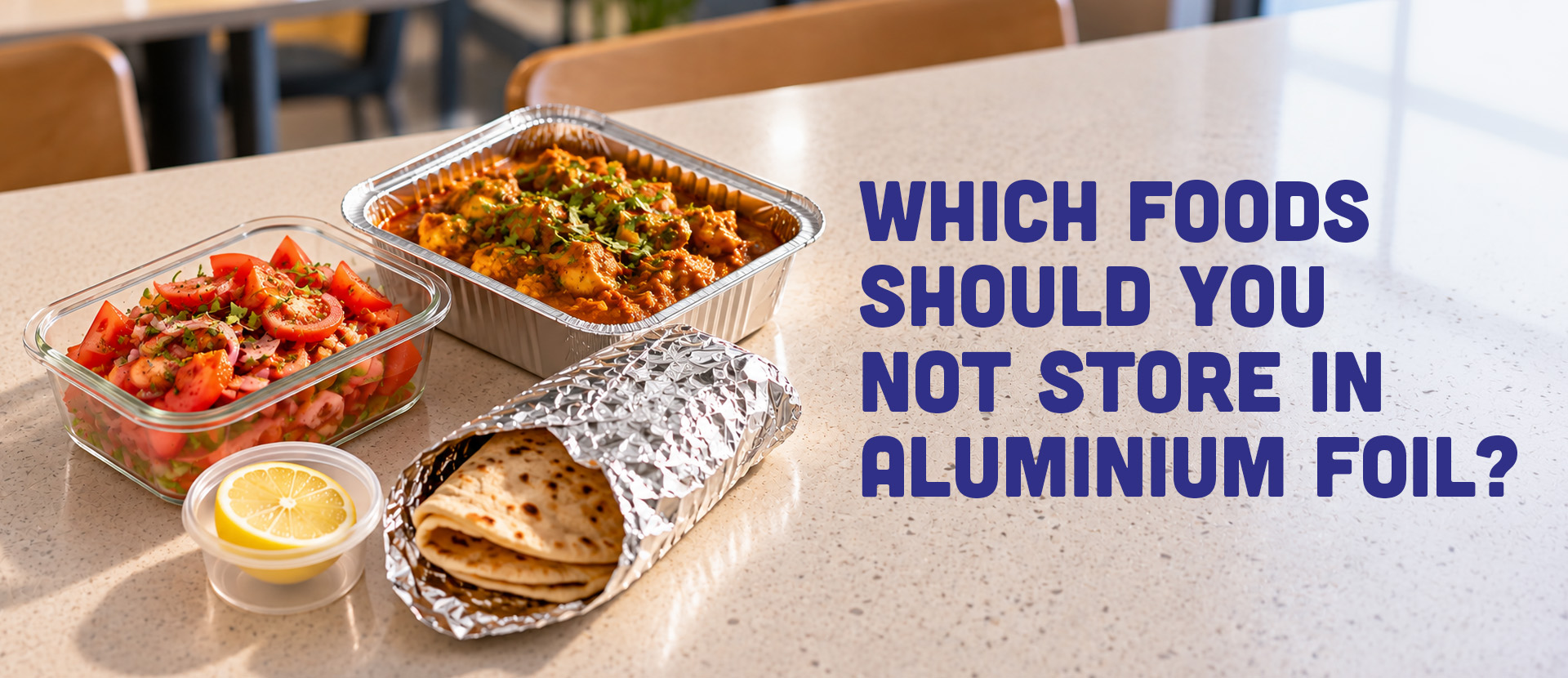
Which Foods Should You Not Store in Aluminium Foil? A Practical Guide
October 08,2026
There is probably a roll of aluminium foil sitting in almost every Indian kitchen. It comes out during Sunday biryani prep, wraps hot rotis for travel, covers leftover sabzi before it goes into the fridge and somehow always appears when someone says, “Yeh pack kar dena.”
It is one of those everyday kitchen essentials we barely think twice about.
But here’s something worth knowing: while aluminium foil is incredibly useful for wrapping and protecting food, not every food loves being stored in it for the same amount of time.
The reason is not that foil is unsafe. It is that certain foods, particularly highly acidic or salty ones, can react with aluminium during prolonged direct contact. That is why understanding aluminium foil food safety is less about avoiding foil altogether and more about knowing when it works best.
So if you have ever wondered if you can store food in aluminium foil, this practical guide is for your kitchen.
First things first: What does aluminium foil do well?
Before we talk about what not to wrap, let’s give foil the credit it deserves.
Aluminium foil for food storage is widely used because it creates a protective barrier around food, helping keep it covered, reducing exposure to air and making everyday storage and transport much more convenient.
Think of all the foods we regularly wrap without a second thought:
- Rotis for the lunchbox
- Sandwiches for office
- Dry snacks for travel
- Grilled paneer or kebabs
- Baked dishes
- Leftover vegetables before placing them inside a storage container
These are all common examples of safe foods to wrap in aluminium foil when handled and stored appropriately.
The trick lies in recognising that foil is a wrapping material, not a one-size-fits-all storage solution.
So, which foods should not be stored directly in aluminium foil?
The easiest way to remember this is simple.
If your food is very acidic, vinegar-heavy or extremely salty, avoid storing it in direct contact with foil for long periods.
Why?
Because acidic ingredients can react with aluminium, causing the foil to pit slightly over time. This may also increase aluminium transfer into the food and affect its appearance or taste.
Here are the foods that deserve a little extra care.
1. Tomato-based curries
India and tomatoes are inseparable.
Rajma, butter chicken, paneer masala, rasam, sambhar and countless gravies begin with tomatoes doing most of the flavour heavy lifting.
Tomatoes are naturally acidic, which means storing a tomato-rich curry directly wrapped in foil for extended periods is not the best idea.
Instead, transfer the curry into a food-safe airtight container and refrigerate it. If you want to cover the container, foil can still be used as an outer cover without being the food’s primary contact surface.
A small kitchen switch can go a long way.
2. Tamarind chutney and imli-based dishes
Whether it is pani puri ki meethi chutney or the tamarind pulp used in sambhar, imli brings plenty of tang to Indian food.
That tang comes from natural acids. For this reason, tamarind-heavy foods are better stored in glass or food-safe containers rather than wrapped directly in foil for long durations.
Your chutney deserves to stay delicious without becoming part of a chemistry experiment.
3. Lemon and citrus preparations
Nimbu ka achaar.
Lemon rice.
Fresh lime-marinated vegetables.
Anything where lemon is the star ingredient contains citric acid, which is another reason to avoid prolonged direct storage against foil.
Instead, store citrus-based foods in suitable airtight containers and use foil only where appropriate for covering or transporting rather than extended direct contact.
4. Vinegar-heavy foods
Those delicious pink pickled onions served with biryani?
The vinegar is doing its job beautifully, but it also makes the food more acidic.
Similarly, foods preserved with vinegar-based dressings, marinades or sauces are better stored in containers designed for acidic foods rather than wrapped directly in aluminium foil for long periods. This is especially useful if you are meal-prepping for several days.
5. Pickles
Every Indian household has strong opinions about achar.
Mango. Lemon. Mixed vegetables. Garlic.
And while the flavours only get better with time, pickles are not ideal candidates for prolonged direct contact with foil because they are often both acidic and salty.
The better option is the classic one our grandmothers already trusted: a clean glass jar or suitable airtight container.
Sometimes tradition and food science agree surprisingly well.
But what about spicy food?
Here is where many people get confused. Spicy does not automatically mean “do not wrap.”
A dry chilli paneer, grilled tikka or masala roti is very different from a vinegar-loaded pickle.
The concern is more about acidity and salt interacting with aluminium during extended contact rather than spice alone.
So your favourite masala paratha wrapped for lunch is perfectly different from storing tamarind chutney overnight in direct foil contact.
The foods that foil works beautifully for
Now for the reassuring part. There are plenty of everyday Indian foods that are commonly wrapped successfully using foil as part of normal kitchen routines.
These include:
- Rotis and parathas
- Dry sabzis
- Sandwiches
- Paneer wraps
- Grilled vegetables
- Kebabs and tikkas
- Cutlets
- Dry snacks like mathri or thepla
- Stuffed rolls
- Bakery items meant for short-term carrying
These examples make safe foods to wrap in aluminium foil easy to remember because they are generally lower in acidity and are often wrapped for convenience, transport or short-term storage.
The Freshwrapp perspective: Designed for real Indian kitchens
Indian kitchens are wonderfully unpredictable. One day it is dal and roti. The next day it is green chutney, mango pickle and vegetable sandwiches packed for a road trip.
That is exactly why Freshwrapp’s food contact testing focused on everyday Indian eating habits rather than one single cuisine.
According to Freshwrapp’s NABL approved lab testing, Freshwrapp Aluminium Foil was evaluated across multiple everyday Indian food categories including dal, rotis, vegetables, fruits, sandwiches, chutneys and pickles to assess aluminium migration under the tested conditions.
The key takeaway is simple. The CALF findings help strengthen Freshwrapp’s safety credentials through scientific testing and measurable food-contact assessment. Good food storage is never about one material doing everything. It is about using the right solution for the right dish.
Smart storage habits every kitchen should follow
Whether you are wrapping rotis for school or saving last night’s sabzi, these simple habits make food storage much easier.
Let hot food cool slightly
Wrapping steaming-hot food immediately can create condensation inside the wrap. That moisture may affect texture, especially for breads and fried foods. Give your food a few minutes to cool before wrapping.
Use containers for gravies
Dal, curries and chutneys are much happier inside suitable airtight containers than being wrapped directly in foil.
Use foil as a cover if needed, not necessarily as the primary storage surface.
Keep dry and wet foods separate
Nobody enjoys soggy sandwiches. Separating moist foods from dry foods helps maintain texture and freshness for longer.
Refrigerate when required
This one is important.
Foil helps wrap food, but it does not replace refrigeration.
Perishable leftovers should still be refrigerated promptly in appropriate containers according to safe food storage practices.
Freshwrapp Aluminium foil has earned its place in Indian kitchens because it is practical, versatile and incredibly useful for everyday food wrapping.
The secret is simply knowing its strengths.
Use Freshwrapp aluminium foil for food storage when wrapping rotis, sandwiches, grilled foods, dry snacks and many other everyday favourites. Be more mindful with highly acidic foods like tomato gravies, tamarind chutneys, lemon preparations, vinegar-based dishes and pickles when storing them for longer periods in direct foil contact.
Because smart food storage is not about using less foil.
Frequently Asked Questions
Which foods should not be stored in aluminium foil?
Highly acidic foods such as tomato-rich curries, tamarind chutneys, lemon-based dishes, vinegar-heavy preparations and many pickles are better stored in suitable airtight containers rather than in prolonged direct contact with aluminium foil.
Why should acidic foods not be wrapped directly in aluminium foil?
Acidic foods can react with aluminium during extended direct contact, which may cause the foil to pit or corrode slightly and can affect the appearance or taste of the food. For longer storage, airtight food-safe containers are usually the better option.
Does aluminium foil react with acidic foods?
Yes. Foods containing ingredients like tomatoes, citrus, vinegar or tamarind can react with aluminium over time during direct contact. That is why practical aluminium foil food safety guidance recommends using suitable containers for prolonged storage of highly acidic foods.
Which foods are safe to wrap in aluminium foil?
Common everyday examples include rotis, parathas, sandwiches, grilled paneer, kebabs, dry vegetables, cutlets, wraps, thepla and many dry snacks. These are widely considered practical safe foods to wrap in aluminium foil for everyday carrying and short-term food wrapping.