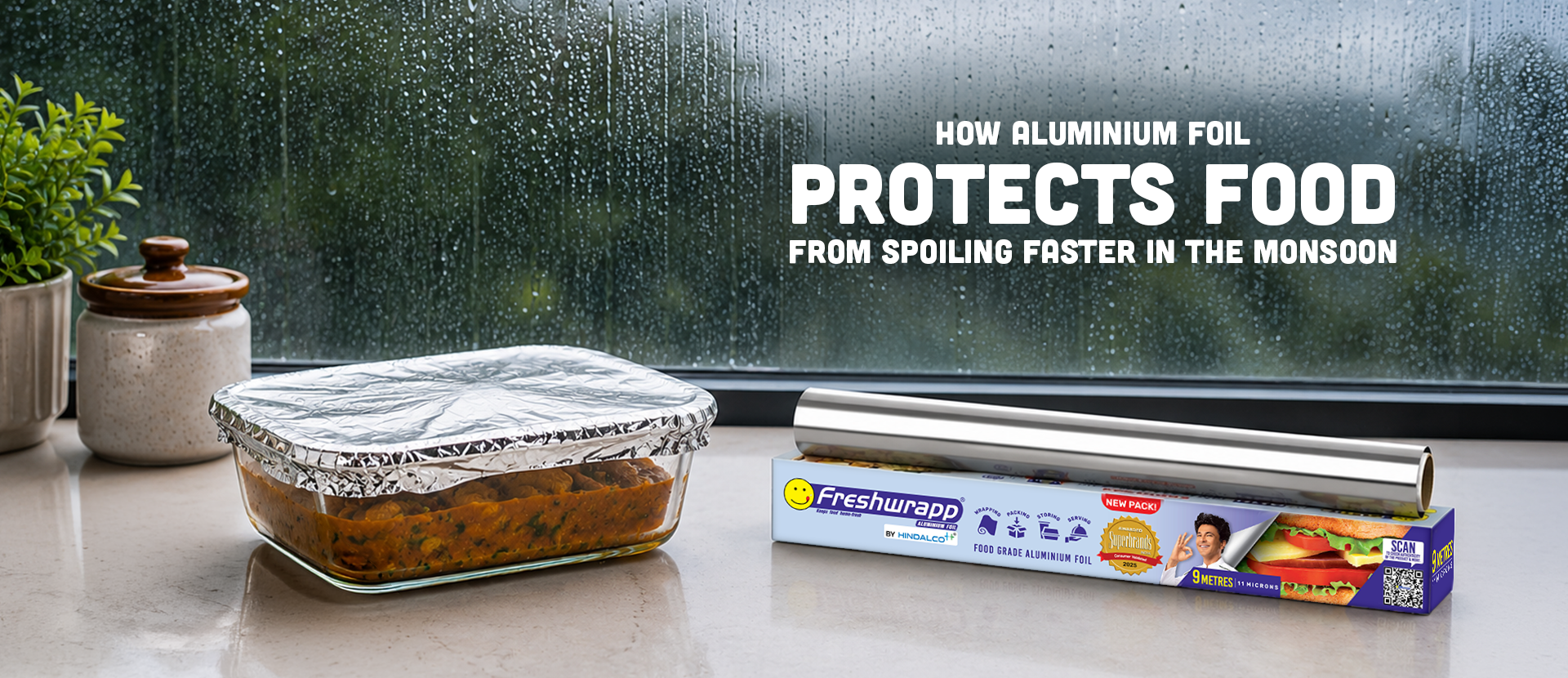
Smarter food storage for the rainy season
August 28,2026
How Aluminium Foil Protects Food from Spoiling Faster in the Monsoon
The monsoon changes the way your kitchen behaves.
The rotis that stayed soft in the morning suddenly feel damp by lunchtime. Crispy pakoras lose their crunch within hours. Freshly toasted sandwiches become soggy before they're eaten, and leftovers seem to demand refrigeration much sooner than they did a few weeks ago.
It isn't your cooking that's changed. It's the air around it.
The rainy season brings a sharp rise in humidity, and that extra moisture creates the perfect environment for food to lose its freshness faster. From changing texture to encouraging bacterial growth, humidity quietly affects almost everything that comes out of your kitchen.
The good news is that keeping food fresh during the monsoon doesn't require a complete change in your routine. A few smarter storage habits, including using aluminium foil for food, can go a long way in protecting the meals you prepare every day.
What Changes Inside Your Kitchen During the Monsoon?
Humidity is simply the amount of moisture present in the air. During the rainy season, those moisture levels remain high for long periods, even when it isn't raining.
Food naturally exchanges moisture with its surroundings. When the air is humid, many foods begin absorbing that excess moisture, while warm cooked food also creates condensation as it cools. Together, these conditions affect freshness much sooner than they would during drier months.
At the same time, bacteria, mould, and yeast thrive in warm, humid environments. This is why food that could comfortably stay fresh for a few hours in winter may need extra care during the monsoon.
Understanding this change is the first step towards storing food more effectively.
Food Often Changes Before It Actually Spoils
One of the biggest misconceptions is that food spoils suddenly.
In reality, the first signs are often subtle.
Rotis lose their softness and become chewy. Fried snacks begin losing their crispness. Biscuits absorb moisture and turn soft. Sandwiches become damp, and baked goods no longer taste as fresh as they did when they were first prepared.
These changes don't always mean the food is unsafe to eat, but they are signs that humidity is already affecting its quality. Left unchecked, those same conditions can eventually encourage microbial growth and shorten the food's shelf life.
That is why proper storage becomes even more important during the rainy season.
Why Simply Covering Food Isn't Always Enough
Many people place a plate over cooked food or loosely cover it before storing it. While this offers some protection, it doesn't always create an effective barrier against moisture and air.
During humid weather, food benefits from being wrapped more securely. A proper wrap helps reduce unnecessary exposure to the surrounding environment while protecting the texture and freshness of the meal.
This is where aluminium foil for food packaging becomes particularly useful. Its ability to wrap food closely helps minimise contact with excess air and moisture, making it a practical choice for everyday storage.
How Aluminium Foil Helps Preserve Freshness
One of the reasons aluminium foil for food packaging continues to be a kitchen essential is its versatility.
It helps create a protective barrier around food, reducing exposure to moisture, air, and light that can affect freshness. Whether you're packing rotis for lunch, storing leftover curry, or wrapping homemade snacks, foil helps food retain its quality for longer when paired with proper refrigeration and safe food handling.
Knowing how to use aluminium foil for packaging food also makes a difference. Food should be allowed to cool slightly before wrapping to avoid trapping excess steam, and the foil should be sealed snugly around the food for better protection.
Using a good-quality food-grade foil, such as Freshwrapp, can make everyday food storage more dependable, especially during the monsoon when humidity levels remain consistently high.
Small Storage Habits That Make a Big Difference
The way food is stored matters just as much as what it is stored in.
Allow cooked food to cool slightly before wrapping it. Refrigerate leftovers within two hours of cooking. Keep lunch boxes clean and dry before packing meals, and avoid leaving cooked food uncovered on the kitchen counter for long periods.
For acidic foods like tomato-based curries or citrus-rich dishes, use parchment paper as a barrier or store them in airtight containers instead of wrapping them directly in foil.
These simple habits help preserve both freshness and food quality throughout the rainy season.
Foods That Benefit Most from Foil Wrapping During the Monsoon
Some foods are particularly sensitive to humidity and benefit from being wrapped properly.
Rotis, parathas, sandwiches, wraps, grilled vegetables, baked snacks, paneer dishes, and homemade rolls all retain their texture better when protected from excess moisture. Packing them in aluminium foil for food also makes them easier to carry for work or school while helping them stay fresher until mealtime.
Freshness Needs a Different Routine During the Monsoon
Every season changes the way we cook, eat, and store food. The monsoon is no different.
As humidity rises, food naturally becomes more vulnerable to moisture, texture changes, and faster spoilage. Fortunately, keeping meals fresh often comes down to a few thoughtful habits rather than major changes in the kitchen.
Wrapping food well, refrigerating it on time, and choosing the right storage materials can all help preserve freshness during the rainy months. Aluminium foil for food packaging remains one of the simplest and most practical ways to protect everyday meals, making it easier to enjoy the same taste and quality from the first bite to the last.
FAQs
1. Why does food spoil faster during the monsoon?
During the monsoon, high humidity creates the ideal conditions for bacteria, mould, and yeast to multiply more quickly. Food also absorbs moisture from the air, which can affect its texture and shorten its shelf life. This is why leftovers, packed lunches, and freshly cooked meals need extra care during the rainy season.
2. Does aluminium foil help keep food fresh?
Yes. Aluminium foil for food acts as a protective barrier against air, moisture, and light, helping preserve the freshness and texture of cooked meals. While it doesn't stop food from spoiling indefinitely, it supports better food storage when used with proper refrigeration and safe food handling practices.
3. How should cooked food be stored during humid weather?
Let cooked food cool slightly before wrapping or covering it, then refrigerate it within two hours of cooking. Using aluminium foil for food packaging or airtight containers helps reduce exposure to excess moisture. Avoid leaving cooked food uncovered on the kitchen counter, as humid conditions can encourage faster spoilage.
4. Is aluminium foil better than plastic wrap for food storage?
Both have their advantages. Aluminium foil for food packaging is ideal for wrapping cooked meals, rotis, sandwiches, baked items, and leftovers because it forms a strong barrier against moisture and light. Plastic wrap is better suited for sealing bowls or covering fresh produce. The right choice depends on the type of food and how it will be stored.
5. Which foods should always be wrapped in foil during the rainy season?
Foods like rotis, parathas, sandwiches, wraps, grilled vegetables, paneer dishes, baked snacks, and cooked leftovers benefit from foil wrapping during the monsoon. Wrapping them properly helps protect their texture and freshness by reducing exposure to humid air. Acidic foods, however, are best stored in airtight containers or wrapped with parchment paper before using foil.