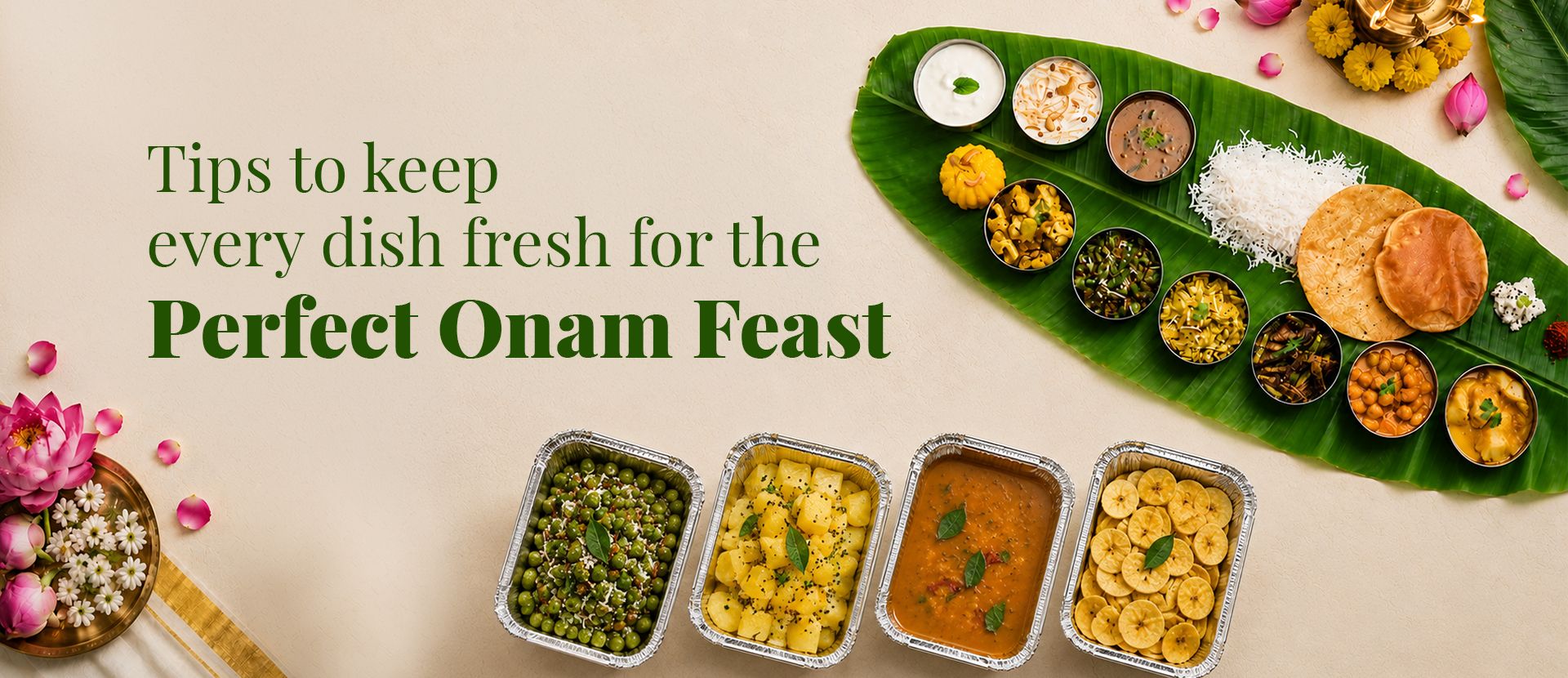
Smart food storage tips for a fresh Onam feast
August 28,2026
Tips to Keep Every Dish Fresh for the Perfect Onam Feast
Onam is a celebration of abundance in every sense. From vibrant pookalams and elegant Kasavu attire to the excitement of the Vallam Kali race, every tradition reflects prosperity. But if there's one tradition everyone looks forward to, it's the Sadya, a feast that fills not just the stomach, but the heart.
But the celebration doesn't end when the banana leaves are cleared.
An Onam Sadya is meant to be shared beyond the dining table. It lives on in conversations over second helpings, meals packed for loved ones and recipes enjoyed long after the celebration is over.
There's always another serving saved for someone who arrived a little late. A neatly packed meal for a neighbour or relative. A bowl of payasam waiting in the fridge for the evening. Leftovers that somehow taste just as comforting the next day.
Because the spirit of Onam is also in making sure there's always enough to share.
Keeping every dish fresh is just as important as preparing it. From cooking ahead of time to storing leftovers after everyone has eaten, thoughtful food wrapping for festivals helps preserve the flavours, textures, and care that go into every recipe. A simple kitchen essential like Freshwrapp aluminium foil can make that process easier, allowing every dish to stay ready for the next serving.
An Onam Sadya Is a Labour of Love
Preparing an Onam Sadya is unlike making an everyday meal. A traditional spread can include more than twenty dishes, each with its own ingredients, cooking method and timing. Some recipes are prepared the previous evening, while others are made early in the morning or just before guests arrive.
As the kitchen fills with serving bowls, curries, vegetables, pickles and desserts, organisation becomes just as important as cooking. Dishes waiting to be served need protection from air and moisture, particularly during Kerala's humid monsoon season when food can lose its freshness more quickly.
Covering prepared dishes with Freshwrapp aluminium foil while the rest of the meal comes together helps protect the effort that has gone into every recipe. It also keeps the kitchen organised, allowing you to focus on spending time with family instead of worrying about food sitting uncovered.
Freshness Is Part of the Celebration
The beauty of a Sadya lies in the balance of flavours and textures.
Banana chips should stay crisp until they're served. Avial should remain creamy, not dry. Rice should stay warm and fluffy, while payasam should be just as smooth and creamy, and taste just as delicious when it's poured after the meal. Even simple accompaniments like pappadam and pickles contribute to the overall experience.
Preserving those qualities begins the moment cooking ends. Covering dishes properly, storing food safely, and avoiding unnecessary exposure to warm, humid air all help maintain the freshness of the feast.
These small food storage tips often make the difference between food that simply fills the table and food that truly reflects the care with which it was prepared.
Before the Feast, During the Feast and After
Before the feast, several dishes may already be waiting on the kitchen counter while the remaining preparations are completed. Covering bowls with aluminium foil helps keep them protected until it's time to serve.
During the celebration, serving dishes are opened again and again as guests return for second helpings. Covering them between servings helps reduce unnecessary exposure while preserving freshness throughout the meal.
After the feast, another tradition begins. Leftovers are packed for family members, neighbours or friends, while favourite dishes are saved for the next day. Wrapping individual portions neatly with Freshwrapp aluminium foil makes sharing and storing homemade food simple and convenient.
These are the moments where thoughtful food wrapping for festivals becomes just as valuable as the cooking itself.
Preserve Homemade Food Without Losing Its Freshness
Homemade festive food deserves the same care after cooking as it receives during preparation.
Whether you're storing kalan, thoran, olan, erissery, or a generous serving of payasam, proper wrapping helps preserve homemade food by reducing exposure to air and moisture. Combined with prompt refrigeration, it helps maintain flavour and texture until the food is ready to be enjoyed again.
Using aluminium foil is also a practical choice when sending festive meals home with loved ones. Individual portions are easy to wrap, carry and store, making it convenient to continue sharing the celebration beyond your own home.
Simple Festival Meal Storage Ideas
Preparing a large festive spread becomes much easier when storage is part of the plan. Allow cooked dishes to cool slightly before covering them to reduce excess condensation.
Wrap different dishes separately to help preserve their individual flavours and textures. Refrigerate leftovers soon after the meal rather than leaving them out for long periods.
Keep dry snacks such as banana chips in airtight containers to maintain their crispness, while using aluminium foil to cover freshly prepared dishes and serving bowls. Pack extra portions neatly if you're sharing food with neighbours or relatives.
These practical festival meal storage ideas help minimise food waste while ensuring every dish tastes its best when it's served again.
Celebrating Beyond the Banana Leaf
One of the most heartwarming parts of Onam happens after the meal is over. A packed container of Sadya handed to a neighbour. A family member reaching for leftover payasam in the evening. Lunch the next day made from dishes that still taste just as comforting as they did during the celebration.
The festival may begin around the banana leaf, but it continues through these small moments of sharing. Keeping those dishes fresh doesn't require complicated routines. Thoughtful storage, careful handling, and dependable kitchen essentials like Freshwrapp aluminium foil help preserve the flavours you've spent hours creating. That means every serving, whether it's the first or the last, continues to reflect the love, tradition, and generosity that make an Onam feast so memorable.
FAQs
How can I keep Onam dishes fresh for longer?
Allow cooked dishes to cool slightly before covering them, then store them promptly in the refrigerator. Using Freshwrapp aluminium foil to wrap serving bowls or individual portions helps protect food from excess air and moisture, keeping dishes fresher until they're served or enjoyed later.
Can aluminium foil be used to store hot food?
Yes. Aluminium foil can be used for freshly cooked food, but it's best to let food cool for a short while before wrapping it. This helps reduce condensation, which can affect the texture of certain dishes.
What is the best way to store leftover Onam Sadya?
Transfer leftovers to clean containers or wrap them securely with aluminium foil, then refrigerate them within two hours of serving. Storing different dishes separately helps preserve their individual flavours and textures.
Is aluminium foil safe for wrapping traditional Indian dishes?
Yes. Food-grade aluminium foil is safe for wrapping most traditional Indian dishes. However, highly acidic foods are best stored in containers or wrapped with parchment paper before using foil for longer storage.
How long can festive food stay fresh when wrapped in foil?
Wrapping food in foil helps preserve freshness, but storage time depends on the type of dish. Most cooked festive foods should be refrigerated promptly and consumed within two to three days for the best quality and food safety.