Packing Navratri Bhog for Freshness and Safe Distribution
October 22,2026
Festive food is meant to be shared, whether it’s a plate of homemade snacks for neighbours or meals prepared for a community gathering. But when you’re cooking for a crowd, there’s more to think about than just the menu. Food needs to be portioned, packed and transported carefully so it reaches everyone in good condition.
During Navratri, distributing bhog and puja meals is a meaningful part of the celebrations. From sabudana khichdi and kuttu puris to fruits and vrat-friendly sweets, every dish needs a little planning to stay fresh and easy to serve. With these practical tips, you can make the process simpler, more hygienic and better organised.
Plan the Menu and Portions in Advance
Start by listing the dishes you’ll prepare and estimating how many people you need to serve. For larger gatherings, decide on a standard portion size before cooking. This helps you estimate quantities, avoid food wastage and make sure everyone receives a fair serving.
Choose dishes based on how easily they can be packed and transported. Dry snacks, fruits and sweets are generally easier to distribute than dishes with gravies or sauces. If your menu includes both, plan separate packaging for each.
Keep a small buffer of servings for unexpected guests, but avoid preparing excessive quantities of perishable food that may be difficult to store safely.
Maintain Hygiene While Preparing and Packing
Clean hands, utensils and work surfaces are essential when preparing food for distribution. Wash your hands before handling cooked food, use clean serving spoons and keep raw ingredients separate from ready-to-eat dishes.
Make sure containers and wrapping materials are clean and suitable for food contact. Avoid touching the inside of containers or the food-contact surface of packaging unnecessarily.
Set up separate areas for portioning food and sealing packed meals. This helps prevent mix-ups and keeps the packing process organised when several people are helping.
Freshwrapp’s food packaging products can support a more convenient packing routine, but safe food handling remains essential at every step.
Choose Packaging That Suits Each Dish
Not every dish should be packed the same way. The right packaging helps prevent leaks, protects food during transport and makes distribution easier.
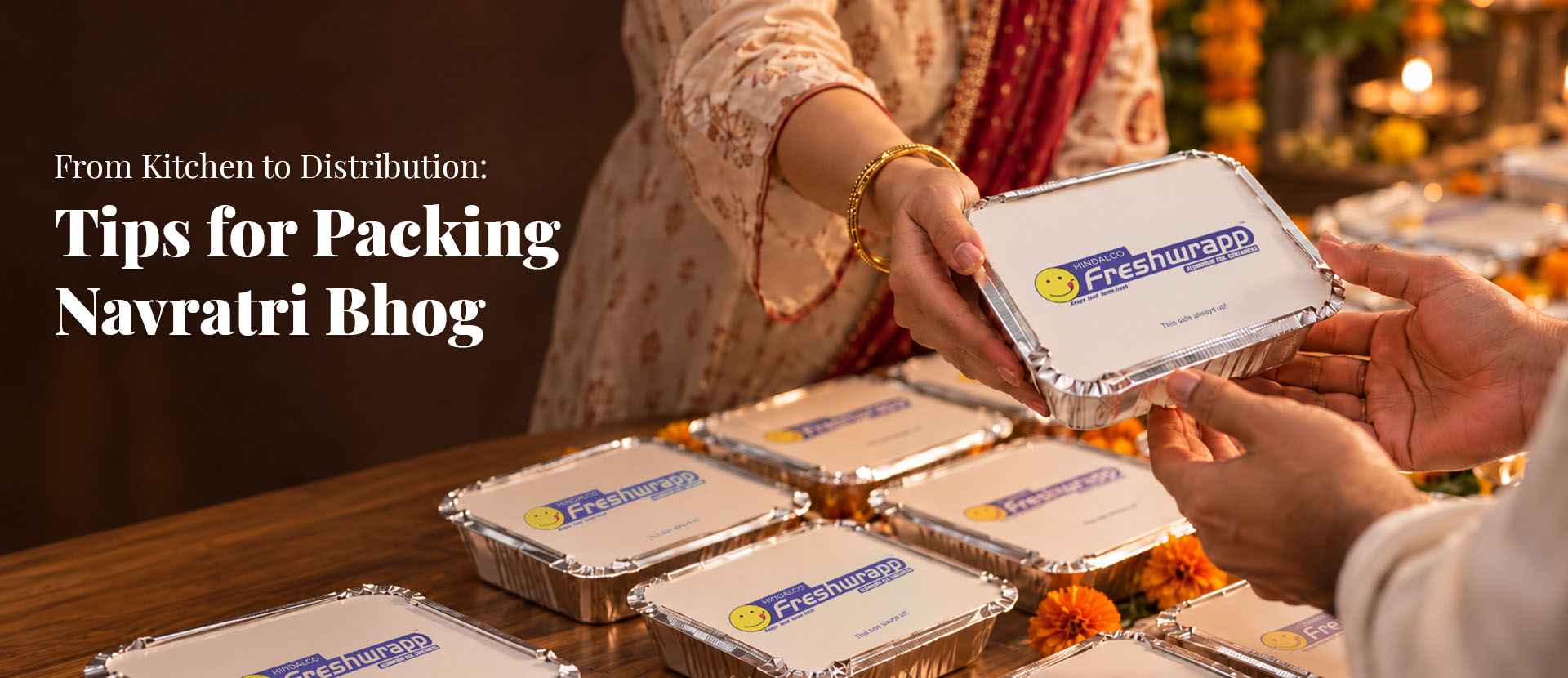
- Cooked meals: Disposable aluminium food containers can be suitable for portioning certain cooked dishes. Choose an appropriate size and ensure the lid fits securely.
- Puris and dry snacks: Aluminium foil for food can help wrap suitable items neatly. Let fried foods release excess steam before wrapping to reduce condensation and sogginess.
- Fruits and sweets: Use clean, food-safe containers that protect delicate items from being crushed.
- Gravies and moist dishes: Choose secure, leak-resistant containers and keep them upright during transport.
When choosing aluminium foil for food packaging, consider the type of food, its temperature and the intended use. Follow the packaging manufacturer’s guidance, especially for hot, acidic or very salty foods.
Keep puris and other crisp foods separate from moist dishes until serving time. Packing them together can make them soft before they reach the recipients.
Portion Food Efficiently for Large Gatherings
Packing dozens or hundreds of servings can get chaotic without a system. Decide on portion sizes in advance and use the same serving spoon or ladle for each batch. This keeps portions consistent and speeds up packing.
Arrange containers in batches rather than filling and moving them one at a time. If the menu includes multiple dishes, create a simple checklist so each meal contains the correct items.
Label containers or trays when meals differ by dish or dietary requirement. This makes it easier for volunteers to distribute the right portions without repeatedly opening packages.
Store Food at Safe Temperatures
Good packaging helps protect food, but it cannot replace temperature control. Perishable foods should not be left at room temperature for extended periods.
As a general food-safety guide, keep hot food at 60°C or above and cold food at 5°C or below. Refrigerate perishable ingredients and prepared dishes promptly when they are not being kept hot for immediate service.
If food is cooked in advance, plan how it will be stored and reheated safely. Avoid preparing perishable dishes too early if you do not have enough refrigeration or hot-holding equipment.
Pack food as close to distribution time as possible. If there is a delay, make sure the food remains at a safe temperature rather than relying on foil or containers to keep it safe.
Transport Meals Without Spills or Soggy Food
Even well-packed meals can get messy if containers are stacked carelessly or moved around too much. Place packed portions in clean, covered trays or sturdy boxes, and keep containers upright. Separate hot and cold foods during transport.
Avoid stacking heavy items on delicate snacks, sweets or fruit portions. For longer journeys, plan the route and timing so the food spends as little time in transit as possible.
Keep a few extra containers, lids and serving spoons ready. They can come in handy if a package gets damaged or you need to accommodate a few additional servings.
Avoid These Common Packing Mistakes
A few small oversights can affect food quality and safety. Avoid:
- Sealing fried snacks while they are still releasing lots of steam.
- Overfilling containers, which can cause spills and messy lids.
- Packing wet and dry foods together, making crisp items soggy.
- Leaving perishable meals unrefrigerated for too long.
- Assuming aluminium foil or a closed container makes food safe at any temperature.
- Packing food without checking that containers are secure and suitable for the dish.
Make Every Serving Easier to Share
Distributing Navratri bhog and puja meals becomes much easier when the menu, portions, packaging and transport are planned together. A little preparation helps reduce spills, minimise food waste and keep distribution organised.
With suitable food packaging from Freshwrapp and careful handling at every stage, you can spend less time sorting out packing problems and more time sharing the spirit of the celebration.
FAQs
How should Navratri bhog be packed for distribution?
Use clean, food-safe, leak-proof containers, and pack individual portions to make distribution easier. Maintain appropriate temperatures during storage and transport.
How can you maintain hygiene while distributing bhog to large groups?
Wash hands, use clean utensils, cover food, and avoid direct hand contact with ready-to-eat items. Keep raw ingredients separate from cooked food and use clean packaging materials.
Should hot bhog be cooled before packing into food containers?
Allow excess steam to escape briefly, then transfer the food into suitable containers and refrigerate promptly if it is not being kept hot for immediate service. Do not leave perishable food at room temperature for extended periods.
Are aluminium food containers suitable for distributing cooked meals?
Yes, food-grade aluminium containers can be suitable for many cooked meals. Choose containers designed for the intended use and avoid prolonged contact with highly acidic or salty foods unless the manufacturer confirms suitability.