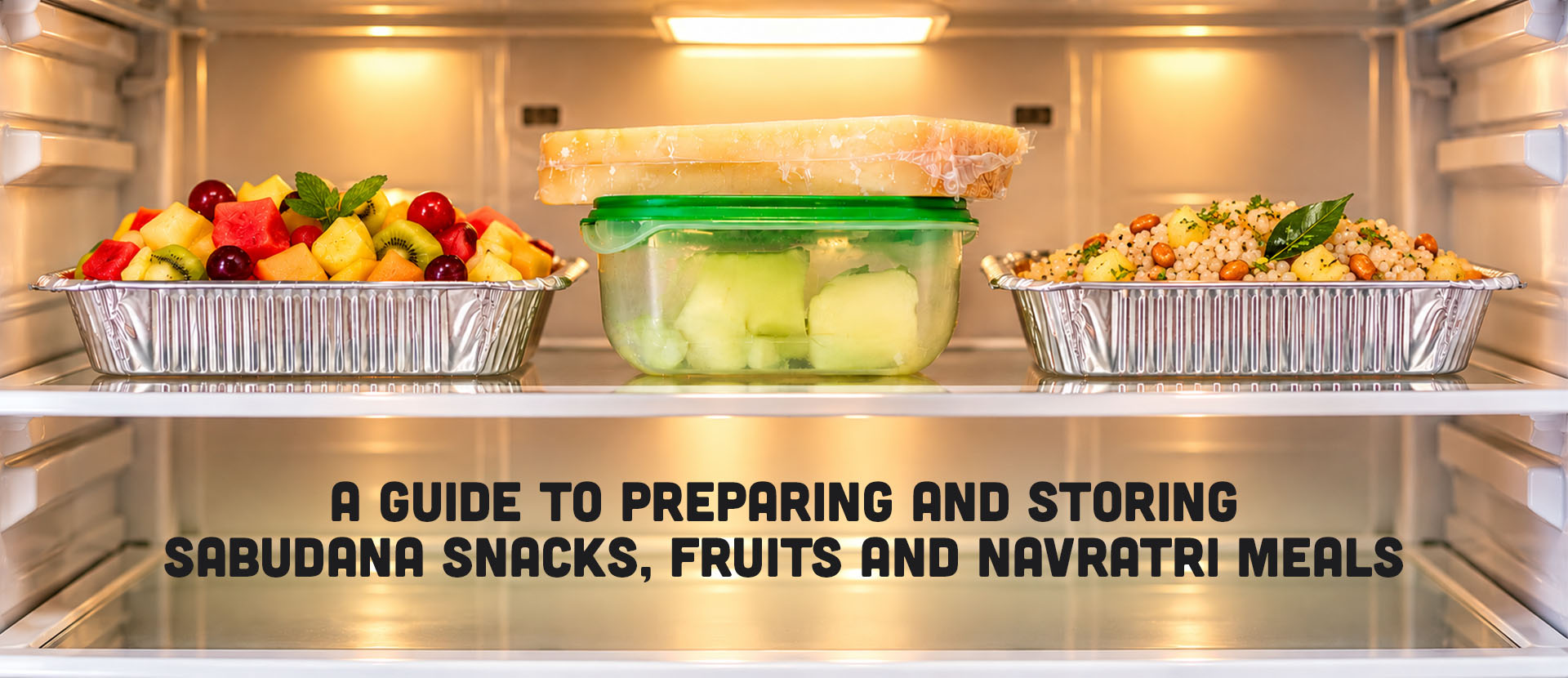
Navratri Fasting Food Prep: Store Sabudana Snacks, Fruits and Meals
October 22,2026
Navratri is all about devotion, festive vibes and delicious vrat-friendly food! From crispy sabudana vadas to refreshing fruit bowls and comforting kuttu puris, there’s plenty to look forward to during the nine days. But between prayers, work and celebrations, preparing every meal from scratch can get a little hectic.
That’s where planning ahead comes in handy. With a little food preparation and storage know-how, you can keep your fasting favourites organised, fresh and ready to enjoy. Here’s how to prep your Navratri meals in advance without compromising on taste or quality.
Plan Your Navratri Menu Ahead
Before you start cooking, make a simple menu for the next few days. List the vrat-friendly dishes you want to prepare, including snacks, fruits and main meals. This helps you organise your ingredients, avoid unnecessary cooking and reduce food waste.
Wash your fruits, measure out ingredients and prepare items such as roasted peanuts or spice mixes in advance. However, keep freshly cut fruits and cooked dishes refrigerated until you’re ready to serve them.
A little planning goes a long way when hunger strikes between your festive plans!
Keep Sabudana Snacks Fresh and Ready
Sabudana khichdi, vadas and tikkis are Navratri favourites, but their texture can change if they aren’t stored properly.
- Prep ahead: Soak sabudana according to your recipe, drain it well and refrigerate it if you’re not cooking immediately. For best results, prepare soaked sabudana fresh when possible.
- Store cooked snacks carefully:Let cooked sabudana snacks cool briefly before transferring them to clean, airtight containers.
- Refrigerate promptly: Store cooked snacks in the refrigerator within two hours of cooking, or within one hour in temperatures above 32°C.
- Reheat before serving: Reheat leftovers thoroughly. An oven or air fryer can help bring back some crispness to vadas and tikkis.
For the best texture, keep wet chutneys and dips in separate containers instead of mixing them with your snacks in advance.
Store Fruits Without Losing Their Freshness
Fruits are convenient fasting options, whether you enjoy them as a quick snack, a fruit bowl or part of your meal.
Wash whole fruits under running water and dry them before storing. Keep cut fruits in clean, covered containers in the refrigerator, preferably in portions you can finish in one sitting. Cutting fruit just before eating also helps preserve its texture and freshness.
Bananas and other fruits that ripen quickly are best prepared closer to serving time. If you're packing fruit for later, use a clean, food-safe container to protect it from spills and contamination.
Pack Fasting Meals the Smart Way
Preparing dishes such as vrat-friendly curries, sabudana khichdi or vegetable preparations ahead of time can save you plenty of effort. The trick is to store each dish properly.
Allow hot food to stop steaming heavily, then transfer it into shallow, food-safe containers and refrigerate promptly. Avoid leaving cooked food at room temperature for extended periods. Most cooked leftovers should be consumed within three to four days when refrigerated at 4°C or below.
For meal portions you plan to eat later, divide the food into smaller containers instead of repeatedly opening one large container. This makes serving easier and helps you manage leftovers.
Make the Most of Aluminium Foil and Containers
The right packaging can make your festive food routine simpler. Here are a few ways to use Freshwrapp for everyday Navratri prep.
Aluminium Foil for Food Wrapping
Aluminium foil for food wrapping is handy for wrapping rotis, parathas and other dry foods for short-term use. It can also help cover food during transport. However, foil alone isn’t airtight, so use a suitable container when you need a more secure seal.
Avoid wrapping highly acidic or salty foods directly in aluminium foil for prolonged storage, as these foods may react with the metal.
Aluminium Container for Food Storage
An aluminium container for food storage can be useful for packing and transporting suitable dishes. Choose containers designed for food contact, and follow the product instructions for storage and heating.
For refrigerated leftovers, use a clean, food-safe container with a secure lid. Always check whether the container is suitable for refrigeration, reheating or oven use before using it for those purposes.
Follow These Simple Food Storage Tips
A few everyday habits can make your Navratri food prep safer and more convenient:
- Label containers with the dish name and preparation date.
- Store raw ingredients separately from cooked food.
- Keep your refrigerator at 4°C or below.
- Refrigerate perishable food within two hours of cooking.
- Avoid reheating the same portion repeatedly; take out only what you need.
- Discard food that has been left out too long or shows signs of spoilage. Remember, food can be unsafe even when it looks and smells fine.
These simple food storage tips make festival food storage easier to manage, especially when you’re preparing several dishes at once.
Enjoy a More Organised Navratri
Navratri fasting doesn’t have to mean spending every spare minute in the kitchen. With a little planning, sensible food storage tips and the right food-safe packaging, you can prepare your favourite vrat-friendly dishes ahead of time and enjoy more of the festivities.
From sabudana snacks to fresh fruit and wholesome meals, a well-organised kitchen helps make every fasting day a little easier. With Freshwrapp, make food prep, packing and storage a simpler part of your festive routine.
FAQs
1. How can you prepare Navratri fasting food in advance?
Wash and cut the fruits, prepare the vrat-friendly snacks ahead of time, and portion the ingredients for the sabudana khichdi and puris properly. Refrigerate perishable ingredients and prepared dishes promptly.
2. How long can cooked fasting food safely remain at room temperature?
Cooked food should generally not remain at room temperature for more than two hours, or one hour if the temperature exceeds 32°C.
3. How should you store cooked sabudana khichdi?
Allow it to cool briefly, transfer it to a clean, shallow, airtight container, and refrigerate within two hours. Consume it within three to four days and reheat thoroughly before serving.