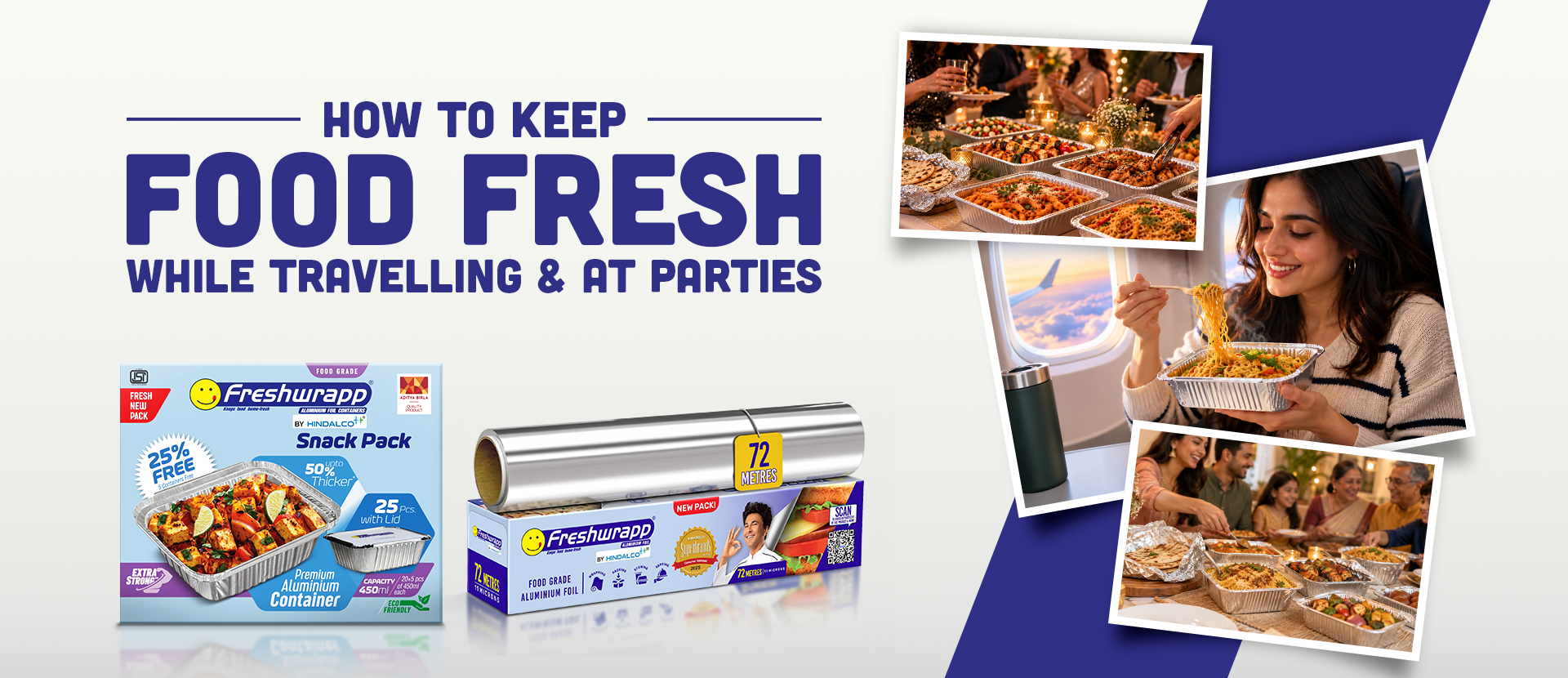
How to Keep Food Fresh for Hours During Travel, Parties & Family Gatherings
October 08,2026
There is always that one question when you are carrying food somewhere: Will it still taste fresh when we finally eat it?
Whether it is a road trip with a carefully packed lunch, a family gathering where everyone is bringing a dish, or a party where the food needs to sit out before guests arrive, keeping food fresh takes a little more thought than simply putting a lid on it.
The good news? A few smart food-storage habits can help you protect flavour, texture and freshness from your kitchen to the table.
Here are some practical ways to do it.
1. Let freshly cooked food cool before packing
Packing piping-hot food immediately can lead to condensation inside the container. That trapped moisture can affect texture and make foods such as fried snacks, breads and other preparations turn soggy.
Let food cool appropriately before packing it. However, do not leave perishable food sitting out for long periods just to cool down. If it needs refrigeration, move it into the refrigerator promptly using suitable shallow containers.
The aim is simple: cool it safely, then pack it smartly.
2. Choose the right container for the journey
Not every food needs the same kind of packing.
Soupy or liquid preparations need sturdy, leak-resistant containers. Dry foods can be packed separately so they retain their texture. Delicate foods benefit from containers that prevent crushing, while snacks are better kept away from moisture.
A good rule for food storage for travel is to think about the food's texture before choosing the container.
Will it leak? Will it sweat? Will it get crushed? Will it absorb moisture?
Your container should answer all four questions.
3. Use aluminium foil for suitable foods
When it comes to aluminium foil for food packaging, its usefulness goes beyond simply wrapping leftovers.
Aluminium foil provides a practical covering for suitable foods, helping protect them from exposure to air, dust and handling while travelling or being served. It can also help retain the food's freshness and keep it neatly wrapped until it is time to eat.
For foods that are suitable for foil wrapping, Freshwrapp Aluminium Foil can be a convenient addition to your packing routine.
Just remember: foil is a wrapping solution, not a substitute for refrigeration. Perishable foods still need to be kept at safe temperatures during travel.
4. Keep hot and cold foods separate
A family gathering can involve everything from hot curries to chilled desserts. Packing them together is an easy way to compromise both temperature and texture.
Use separate containers for hot and cold preparations. For longer journeys, use an insulated bag or cooler with appropriate ice or gel packs for foods that need to remain chilled.
This is one of the most important food packing tips for travel because temperature matters just as much as packaging when it comes to food safety.
5. Pack only what you need
Travelling with food often comes with one temptation: "Let's pack a little extra, just in case."
And suddenly, there are five containers, three serving spoons and enough leftovers for another gathering.
Instead, estimate portions before packing. Smaller quantities are also easier to cool, transport and store safely.
6. Keep moisture in check
Freshness is not only about preventing food from drying out. Sometimes, it is about preventing too much moisture.
Crispy snacks, fried foods and breads can lose their texture when steam gets trapped inside their packaging. On the other hand, foods that need to retain moisture may benefit from being properly covered.
So before you pack, ask yourself: Does this food need to breathe, stay covered or stay chilled?
The answer can help you decide whether you need an airtight container, foil, parchment, an insulated bag or refrigeration.
7. Make serving at parties easier
At a party or family gathering, food may be prepared well before everyone sits down to eat. That makes proper covering and temperature control particularly important.
Keep food covered when it is not being served. Use clean serving utensils and avoid repeatedly opening containers unnecessarily.
For buffet-style gatherings, serve food in smaller batches where possible and replenish them as needed. This can help reduce the amount of food sitting out at once.
8. Keep perishable food chilled
This is the part no amount of clever packaging can replace.
Foods containing ingredients that require refrigeration should be kept cold during travel and gatherings. If you are travelling for several hours, an insulated cooler with sufficient cold packs can help maintain the required temperature.
At a gathering, return perishable leftovers to refrigeration promptly rather than letting them sit out for extended periods.
Because when it comes to food, fresh-looking does not always mean safe.
9. Pack food in the order you will need it
Heading out for a picnic? Taking lunch on a road trip? Carrying multiple dishes to a family celebration?
Think ahead.
Place the foods you will need first somewhere easily accessible. Keep chilled foods together with the appropriate cold packs. Keep dry foods separate from preparations that could make them soggy.
A little organisation at the packing stage can save you from unpacking your entire bag just to find one box.
10. Protect food from unnecessary exposure
Every time a container is opened, food gets exposed to the surrounding environment. During travel and gatherings, this can happen repeatedly.
Keep food covered until serving. For suitable foods, use aluminium foil as an additional protective wrap around food or containers.
Freshwrapp Aluminium Foil is designed to help protect food from bacterial entry through its Freshlock Shield, adding another layer of protection to your food-storage routine.
Freshness starts before the journey
Keeping food fresh during travel or a gathering is not about one magic trick. It is about getting several small things right.
Cook it properly. Cool it appropriately. Pack it well. Keep perishable food chilled. Cover it when needed. And choose the right wrapping for the food.
Whether you are carrying homemade food across town, preparing dishes for a family celebration or packing for a weekend road trip, thoughtful storage can help your food arrive ready to be enjoyed.
FAQs
How can I keep cooked food fresh while travelling?
Allow cooked food to cool appropriately before packing and use clean, suitable, leak-resistant containers. Keep foods that require refrigeration chilled using an insulated bag and cold packs. For suitable foods, aluminium foil can be used as a protective wrap to limit exposure to air and handling.
How long can cooked food safely stay outside the refrigerator?
The safe time depends on the type of food, ambient temperature and how it has been handled. Perishable cooked foods should not be left at room temperature for extended periods. As a general food-safety guideline, the 2-hour rule is commonly used, with a shorter limit in very hot conditions. When in doubt, refrigerate promptly and follow local food-safety guidance.
Does aluminium foil keep food fresh during travel?
Aluminium foil can help cover and protect suitable foods from exposure to air, dust and handling, and can help retain freshness. However, it does not replace refrigeration or temperature control. Foods that require chilling should be transported in an insulated cooler with appropriate cold packs.
What are the best food-storage practices for parties and gatherings?
Keep food covered, use clean serving utensils, separate hot and cold foods, and keep perishable preparations at appropriate temperatures. Avoid leaving perishable food at room temperature for extended periods and refrigerate leftovers promptly. For suitable foods, aluminium foil can provide an additional layer of protection during storage and serving.